Every moment can be a learning opportunity, and the upcoming visit from our Member of Parliament (MP) at the end of this month is the perfect occasion to explore how we can actively contribute to shaping our nation.
To tackle this complex subject, we began with a simple question: What do “laws” really mean?
It all started when we noticed a sign with a command, something like this:
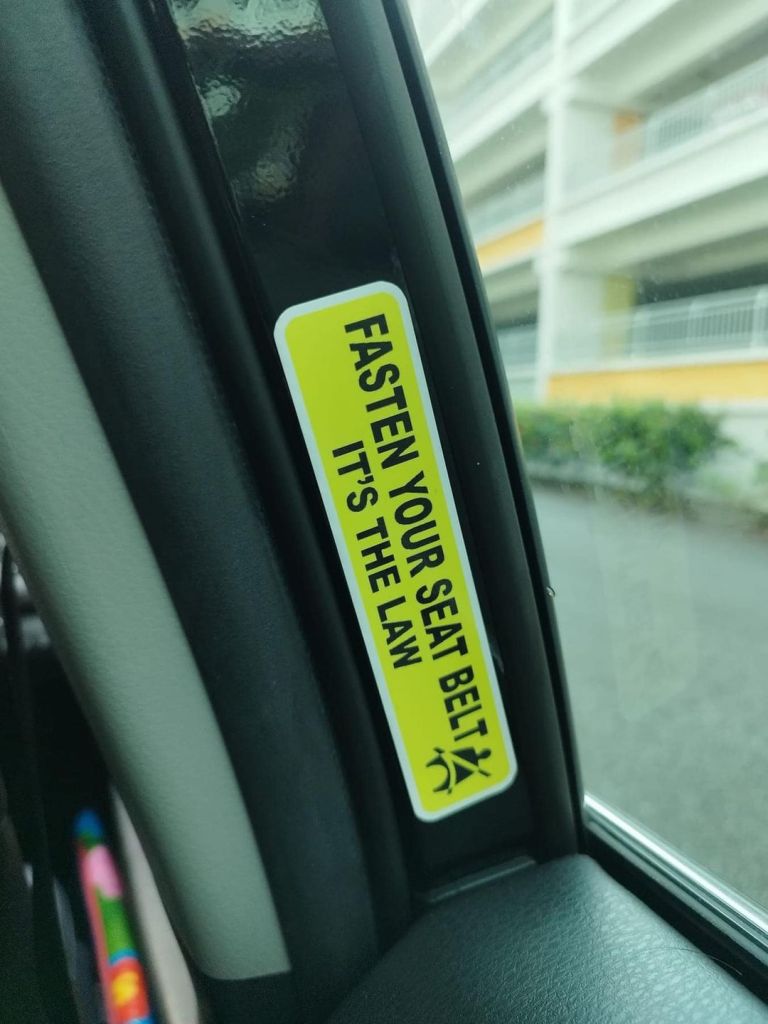
I asked them, “Why should you obey this sign? What happens if you don’t? Who gives this sign its authority? And how is that authority enforced?”
Some signs represent the power of our country’s laws. This power originates from a group of people called Members of Parliament.
If a sign doesn’t appear to originate from a statutory law, you can safely ignore it. Because a command without a power backing it, or if it has no enforcement, is really just a decorative sign.
But signs that originate from statutory law, are passed by Parliament and are backed by a power that can deliver punishment.
From there, we delved into how being a Member of Parliament enables you to propose new laws. These proposals, known as Bills, are debated and voted on by other MPs. If approved, a Bill becomes an Act of Parliament, which the government is then responsible for upholding and enforcing.
Of course, this wasn’t something we covered in just one day. It was a gradual process, with each sign we encountered, each time we crossed the Malaysian border, and each town council poster we saw, serving as a chance to reinforce the lesson.
Then, we learned that our MP would be visiting soon. This was our opportunity to practice active citizenship. I asked them, “The Member of Parliament for our constituency is coming—what do we want to tell her?” We brainstormed things that bothered them personally and issues that affect many others.
A few days later, they started writing with great enthusiasm. Here are the concerns they want the MP to address:
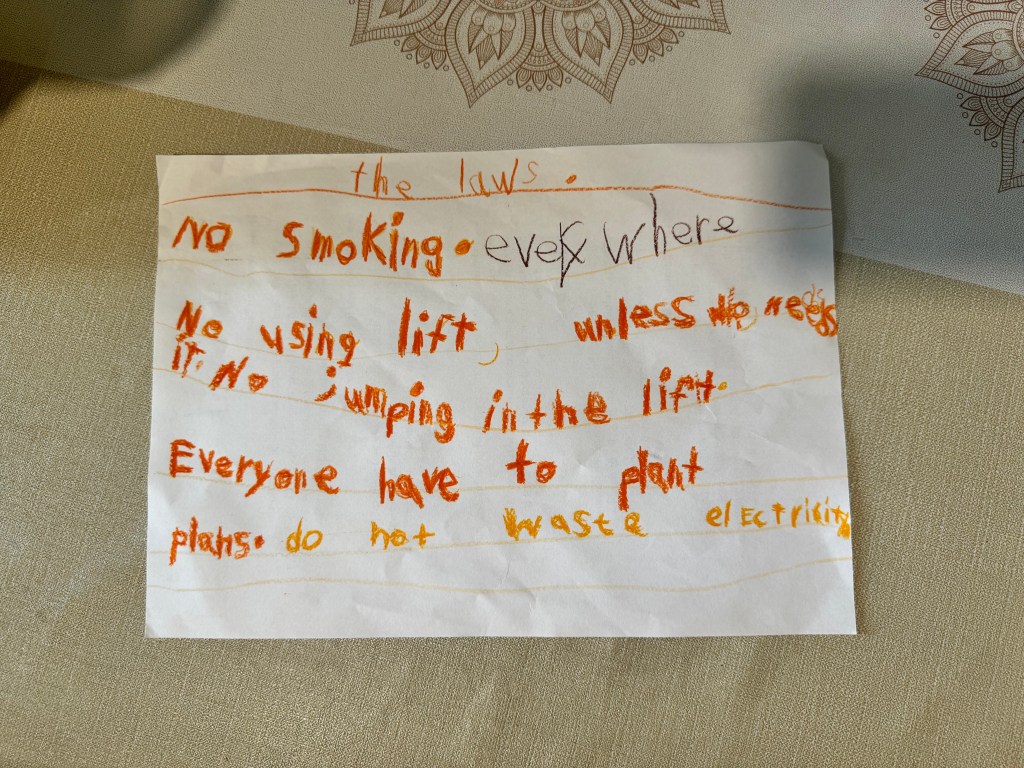
- A universal ban on smoking. They want smoking to be prohibited everywhere.
- Restricted use of lifts, reserving them for those who are physically unfit, encouraging others to use the stairs for health.
- No jumping in lifts, to prevent damage.
- A law requiring everyone to plant trees or plants.
- No wasting of electricity.
I believe numbers 1 and 4 are especially noteworthy.
What’s next? Perhaps a lesson in writing forum letters. We’ll see…



 Queuereus - Journaling our learning
Leave a comment